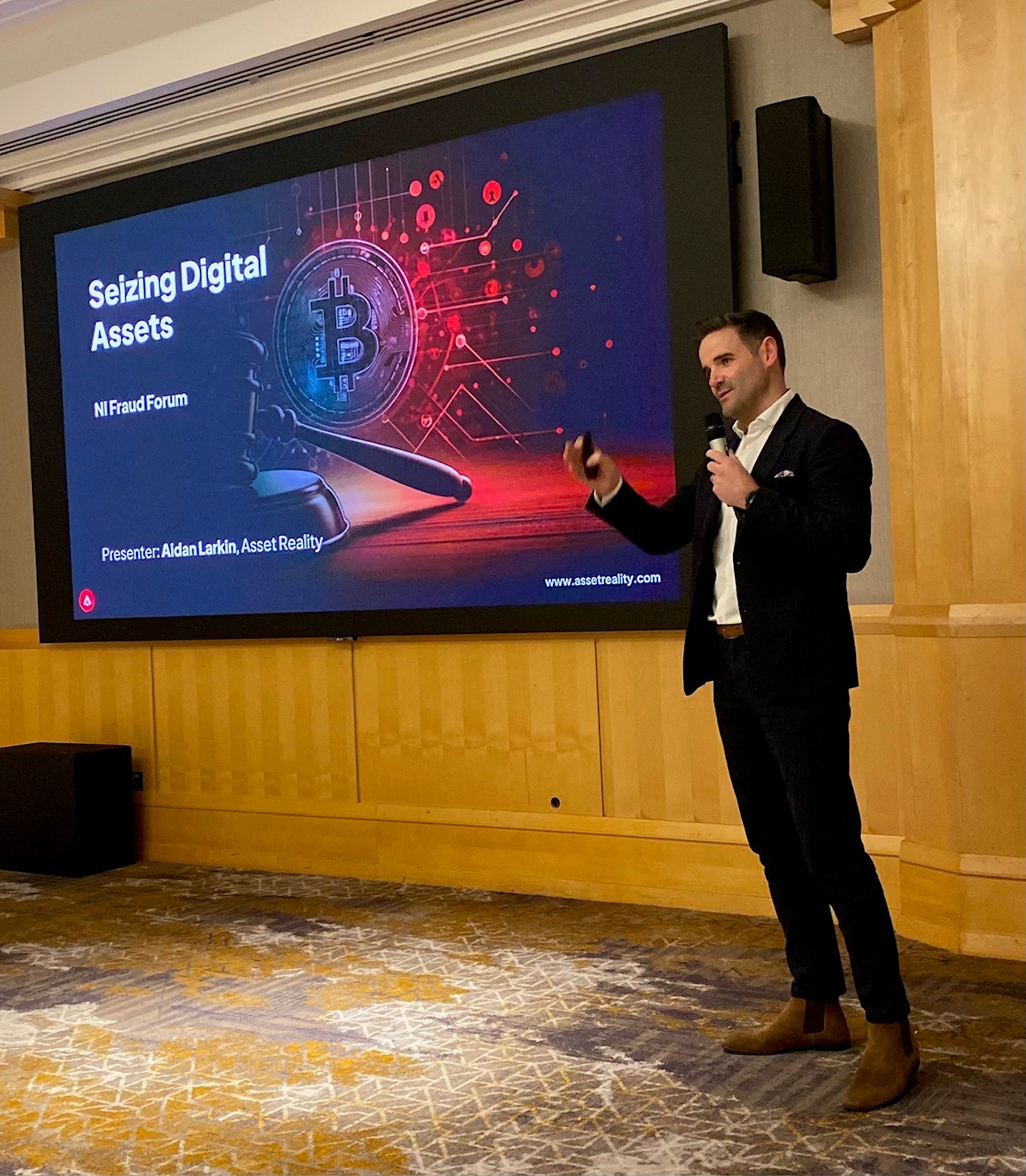
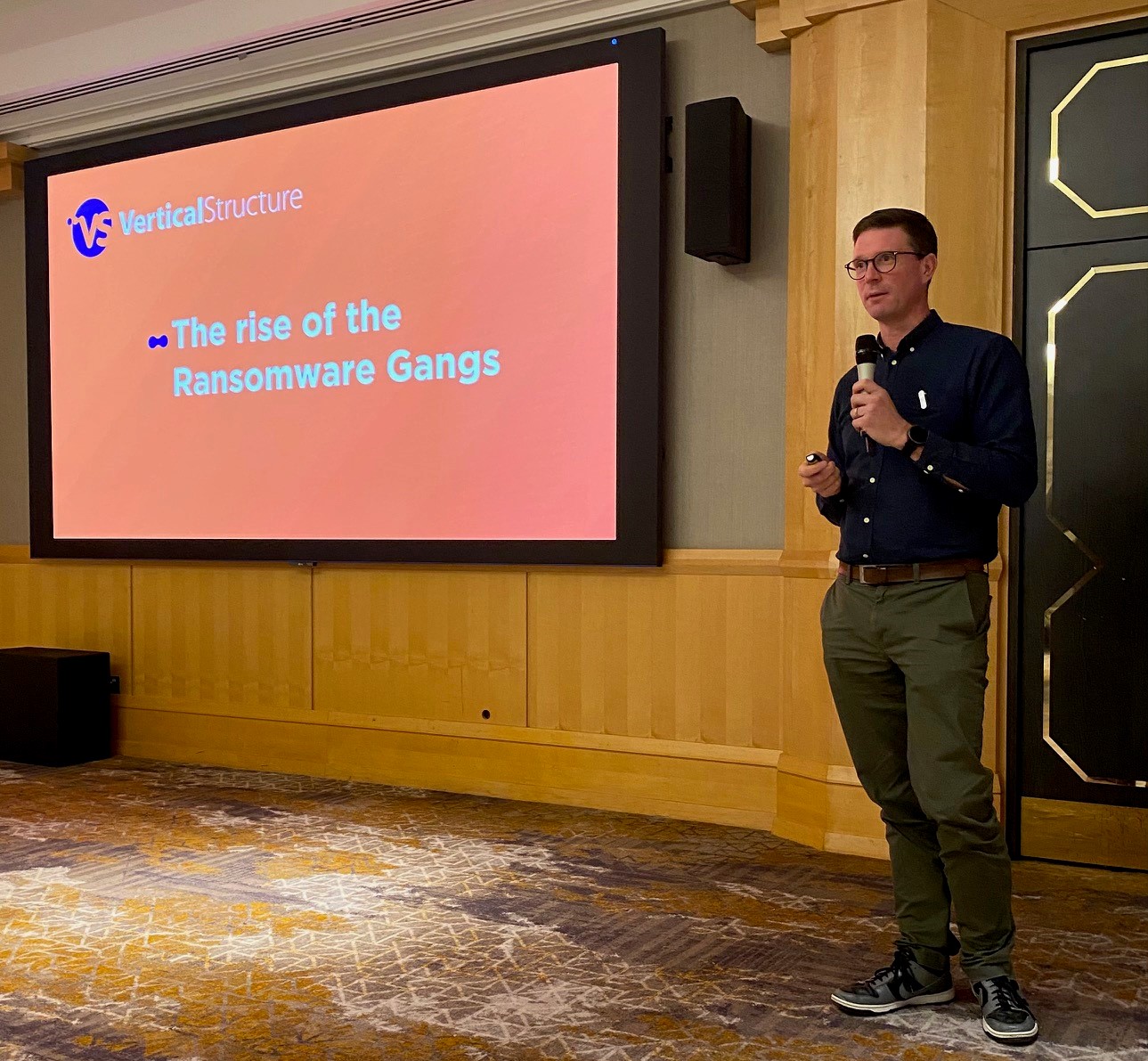
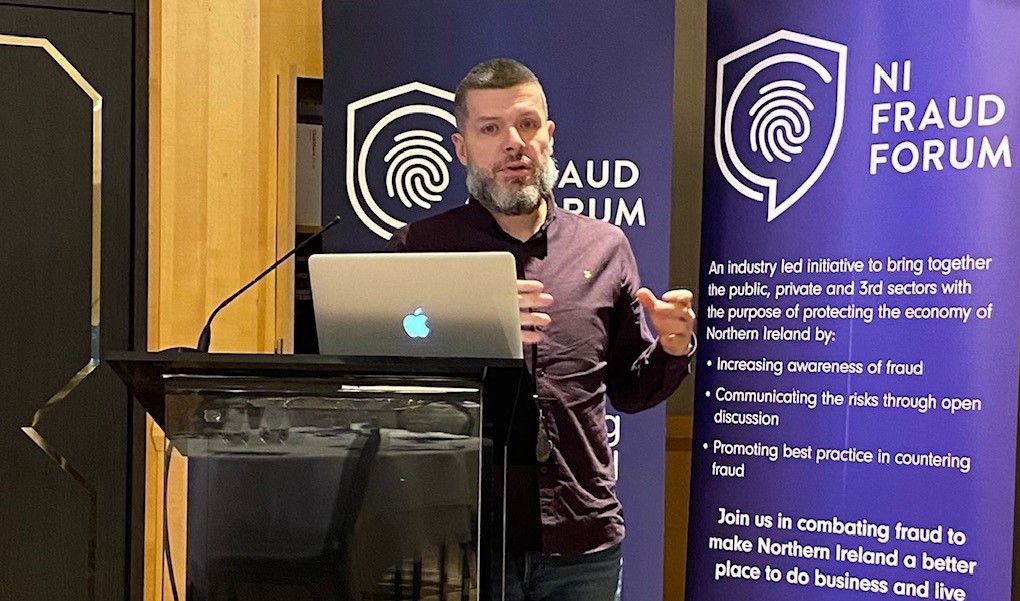
The NI Fraud Forum is a collaboration between professional advisors, industry members and governmental agencies. The objective of the NI Fraud Forum is simple:
- to promote fraud awareness,
- to allow members to understand how best to mitigate against the risks involved; and,
- to increase knowledge of how to respond effectively to fraud.
If you would like to learn more on how to become a member then please go to our membership section.
Hold The Date For Next NI Fraud Forum Event - Wednesday 18th November 2026
You can register to attend below

Register to attend:
The 2026 Tackling Economic Crime Awards - Finalists Are In

The finalists for the 2026 Tackling Economic Crime Awards (TECAs) are in.
From law enforcement and private industry to academia and the public sector, this year’s finalists showcase the people and organisations making a real difference in the fight against fraud and financial crime.
A huge congratulations to every finalist and you can view the full list of 2026 finalists at: https://thetecas.com/2026/09/16/finalists-announced-for-the-2026-tackling-economic-crime-awards/
Sponsors for this year’s TECAs are: Asset Reality (trophy and certificate sponsor) CFPAB, International Security Expo and The Security Event (category sponsors).
If you are interested in attending the TECAs on 3rd November 2026 in the Royal Lancaster in London, you can book you place(s) at: https://thetecas.com/attend/.
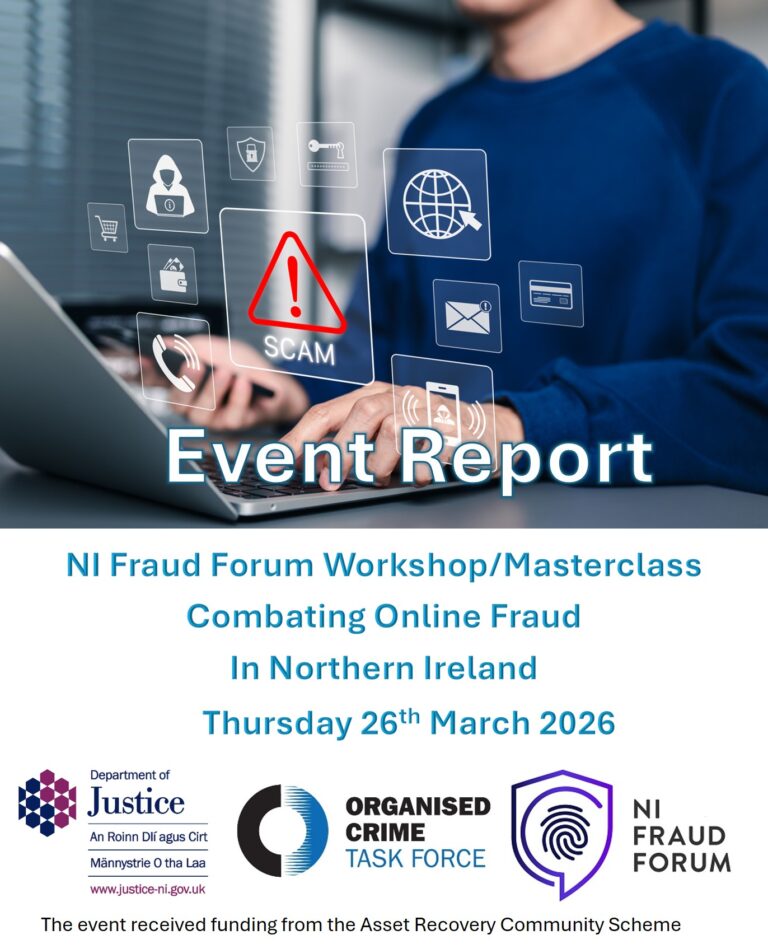
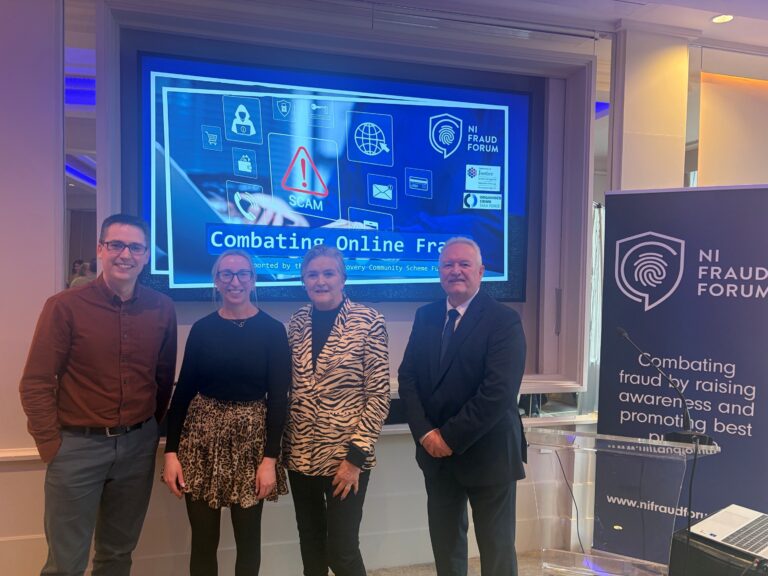
Combating Online Fraud in Northern Ireland: From Conversation to Action
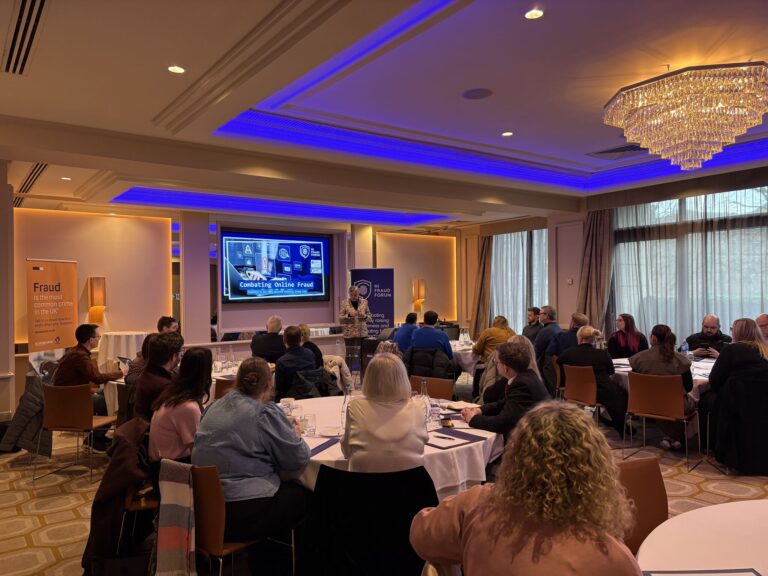
On Thursday 26 March 2026, the Northern Ireland Fraud Forum brought together leaders from across the public, private and community sectors to tackle one of the most pressing issues facing society today: online fraud.
This was not a passive event. With delegates seated in cabaret-style groups, the focus was firmly on collaboration. Through a structured breakout session, participants explored three critical themes:
- Protecting the most vulnerable in our communities
- Transforming fraud reporting into a meaningful tool
- Addressing the growing insider threat
What emerged was both encouraging and sobering. There is no shortage of commitment or ideas across Northern Ireland. But there is a growing recognition that current approaches, while well-intentioned, are often fragmented, overly generic, and lacking in visible impact.
Delegate responses were collected and have been collated. This report captures the key insights from the discussions and sets out practical, achievable actions tailored to Northern Ireland.
Protecting the Most Vulnerable: Beyond Awareness to Real Behaviour Change
Fraud is not hitting all parts of society equally.
Older people are increasingly targeted by account takeover scams, while younger people remain disproportionately exposed to money mule recruitment, often via social media. Yet despite this, traditional awareness campaigns are failing to change behaviour.
The message from delegates was clear: we need to stop telling people what not to do, and start showing them what actually happens and why it matters to them.
Key Insights
- Messaging must be real, local and relatable, not abstract
- Fear-based approaches can backfire, reinforcing shame and reducing reporting
- Northern Ireland’s community infrastructure, our schools, churches, credit unions and voluntary groups, is a major untapped strength
- Fraud prevention must be intergenerational, not siloed by age group
What Needs to Change
Fraud prevention needs to be embedded into everyday life, not delivered as a one-off campaign.
Practical Actions for Northern Ireland
- Leverage schools and youth organisations to equip younger people to educate parents and grandparents
- Expand community-based programmes such as those delivered by AdviceNI and ScamwiseNI, using real Northern Ireland case studies
- Introduce “in-the-moment” interventions at key risk points such as banking transactions, retail payments, and account changes
- Integrate fraud awareness into financial education and community wellbeing programmes, particularly those addressing loneliness and vulnerability
- Encourage all financial services organisations to move toward default multi-factor authentication (MFA) across services
The opportunity here is simple but powerful: make fraud prevention part of everyday conversation, not an occasional warning.
Fraud Reporting: From Frustration to Functionality
If there was one area where frustration was most evident, it was fraud reporting.
Too many victims feel that reporting fraud leads nowhere. Too many organisations operate in silos and too often, the system appears opaque, slow, and disconnected.
The result: people stop reporting and fraudsters benefit.
Key Insights
- Reporting is widely perceived as a “black hole”
- Victims are often passed between organisations with no clear ownership
- There is little or no feedback on outcomes
- Cross-border complexity between Northern Ireland and the Republic of Ireland adds further confusion
There was also a lack of awareness and confidence in the newly introduced Report Fraud platform.
What Needs to Change
Fraud reporting must become:
- Simple to access
- Clear in ownership
- Visible in outcomes
Without this, public trust will continue to erode.
Practical Actions for Northern Ireland
- Establish a single, recognisable “front door” for fraud reporting in Northern Ireland, aligned and integrated to but distinct from national services
- Ensure every report generates basic feedback including acknowledgement, status updates, and outcomes where possible
- Publish regular, visible results such as arrests, disruptions, and recoveries ir order to reinforce public confidence
- Develop a shared data model across PSNI, financial institutions, telecoms providers and online platforms
- Introduce a simple reporting mechanism (e.g. app or portal) to forward scam texts, emails and websites
- Strengthen cross-border collaboration with An Garda Síochána to reflect the realities of fraud operations
The principle is straightforward: if reporting doesn’t lead to action, or at least visible progress, people will disengage.
Insider Threat: A Risk Hiding in Plain Sight
While external fraud often dominates headlines, the risk from within organisations is growing and is frequently underestimated.
Delegates recognised that insider threat is no longer a niche issue. It is a mainstream risk, driven by cost of living pressure, remote working, and increasingly sophisticated methods of infiltration.
Key Insights
- Controls are often strong at recruitment but weaken over time
- Behavioural warning signs are not consistently recognised or acted upon
- Hybrid working has introduced new vulnerabilities around access and data handling
- Cultural barriers still discourage staff from raising concerns
What Needs to Change
Organisations must move from a static compliance model to a dynamic risk management approach.
Practical Actions for Northern Ireland
- Treat insider threat as a board-level risk, particularly across the public and third sectors
- Introduce periodic re-screening for employees in sensitive roles
- Strengthen core controls:
- Segregation of duties
- Access monitoring
- Data flow management
- Multi-factor authentication for privileged access
- Foster a “no blame, no shame” culture to encourage early reporting
- Use independent audits or third-party reviews to challenge internal processes
- Explore the creation of a Northern Ireland cross-sector insider threat forum, enabling shared intelligence and best practice
The reality is uncomfortable but clear: insider threat is not rare and ignoring it does not make it go away.
A Collective Opportunity for Northern Ireland
Across all three themes, a consistent message emerged:
- The challenge is not a lack of effort
- The challenge is lack of coordination, visibility and trust
Northern Ireland is uniquely positioned to address this. Its scale, strong networks, and tradition of partnership provide an opportunity to do something different, something more joined-up, more human, and ultimately more effective.
Five Calls to Action
From the discussions, five clear priorities stand out:
- Make fraud prevention local and relatable by embedding it within communities, not just campaigns
- Create a trusted, single-entry point for reporting in Northern Ireland that’s simple, visible, and accountable
- Close the feedback loop for victims to ensure reporting leads to outcomes people can see
- Elevate insider threat to a strategic risk with continuous monitoring and strong governance
- Build a cross-sector fraud partnership for Northern Ireland enabling data sharing, joint action and collective impact
Conclusion
The event demonstrated that Northern Ireland has both the insight and the willingness to tackle fraud more effectively. The next step is not more discussion.
It is coordinated action.
If we can connect the strengths already present across our organisations and communities, Northern Ireland has the potential to become a model for how fraud can be prevented, detected and disrupted not just across the UK, but internationally.
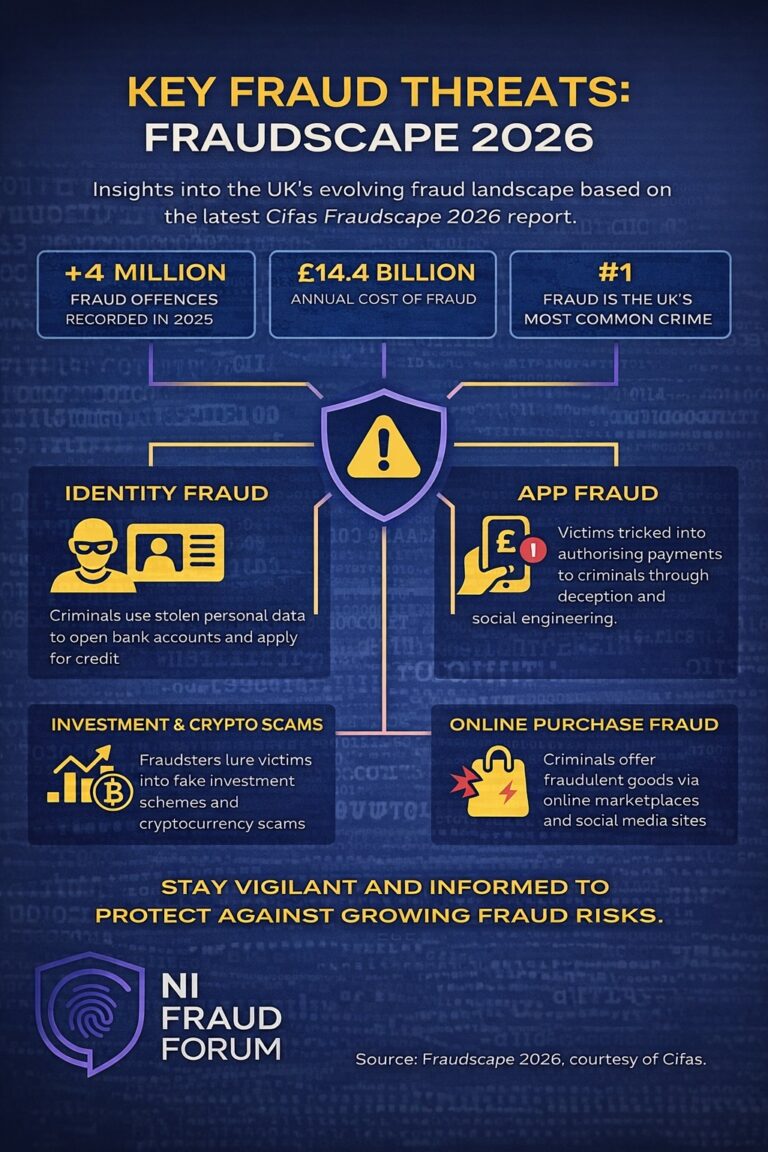
Fraudscape 2026: New Insights into the UK’s Evolving Fraud Threat
See more details at the NI Fraud Forum News Page
Combating Online Fraud - Workshop/Masterclass - Thursday 26th March
The Merchant Hotel - Registration opens at 9am
Northern Ireland Fraud Forum is bringing the conversation on online fraud front and centre this March — and you’re invited
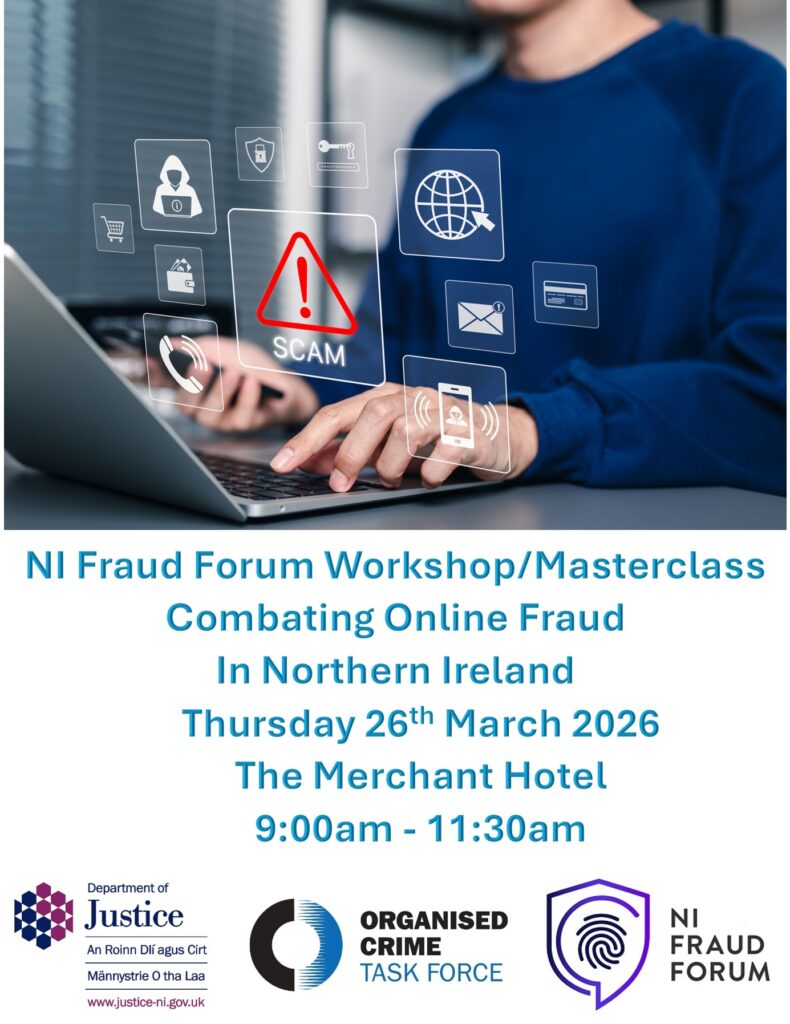
On 26th March 2026, we’ll be gathering at The Merchant Hotel, Belfast for a focused, practical masterclass on Combating Online Fraud in Northern Ireland. Registration opens at 9:00am, with the programme kicking off at 9:30am sharp, and we’ll wrap up by 11:30am — concise, purposeful, and worth your morning.
We’re delighted to confirm a senior speaker from Danske Bank, offering insight from the frontline of financial crime prevention. We’re also delighted to announce that we’ll be joined by Ruth McAlister, a renown forensic investigator with several years experience in tracking down international online fraudsters and cyber criminals, and Ronan Convery from the Consumer Council NI who provide advice advocate on your behalf here in Northern Ireland.
We’ll also hear from our Chairman, Bill McCluggage, who will be providing details on current online fraud activities, the recently launched Report Fraud service that replaces Action Fraud and the new UK Government Fraud Strategy 2026-2029 from a Northern Ireland perspective.
A further additional speaker is currently being confirmed, ensuring a well-rounded and relevant discussion alongside the opportunity to network with peers.
Guiding the morning will be Linda McAuley, former BBC Radio Ulster presenter of On Your Behalf — a familiar voice to many and a champion for consumer protection. Expect straight talking, informed discussion, and no fluff.
This won’t just be a “sit and listen” event. We’ll be running an interactive breakout session where delegates will work together to generate practical ideas on how Northern Ireland can better prevent, detect and respond to online fraud. Real issues. Real collaboration. Real outcomes.
Whether you’re from the private sector, public services, the voluntary and community sector — or simply someone who cares about protecting people and businesses from fraud — this session is for you. Online fraud affects us all, and tackling it takes all of us.
The NI Fraud Forum has received funding for the event from the Asset Recovery Community Scheme and is free to attend, but places are limited.
Tickets can be secured via our Eventbrite page at https://shorturl.at/Ut36e
Join us and be part of the solution.

Register To Attend Here:
Romance fraud in Northern Ireland: the scam has changed and losses are rising
The Police Service of Northern Ireland (PSNI) has issued a stark warning: more than £850,000 has been lost to romance fraud in Northern Ireland in just ten months.
That figure alone should stop us in our tracks. But what is even more worrying is how these crimes are now being carried out.
Romance fraud is no longer only about fabricated emergencies, sudden medical crises or desperate pleas for money. The fraudsters have changed the script and it’s working.
From “love story” to “investment opportunity”
Recent warnings from Nationwide Building Society show a clear shift in criminal tactics. Increasingly, offenders are presenting themselves not just as romantic partners, but as successful investors or insiders with access to “exclusive” financial opportunities.
Victims are groomed emotionally first – and then encouraged to move money into fake trading platforms, cryptocurrency schemes or supposed high-return investments.
This pattern has also been highlighted by researchers at Aston University, where Rasha Kassem explains that criminals are now exploiting aspiration, authority bias and fear of missing out (FOMO) rather than relying purely on emotional distress.
In short: victims are being tempted with easy profits and led to believe they are investing — not being defrauded.
Romance Scammers Are Changing Tactics
Who is being targeted?
Older adults remain the group most affected, but the profile of victims is widening.
Younger people are increasingly being approached through polished social media accounts, professional-looking messaging apps and slick online platforms that appear to show real-time trading activity.
Women, in particular, continue to experience higher average losses per case, and the emotional manipulation involved often means victims stay engaged far longer than in more traditional scams.
The result is deeper financial harm and far greater personal distress.
Why this matters for Northern Ireland
The PSNI warning reflects a trend already being seen across the UK. However, in a relatively small population such as Northern Ireland, the financial impact and personal consequences are felt disproportionately.
Romance fraud is also one of the hardest crimes to report. Shame, embarrassment and emotional attachment to the offender frequently delay victims from seeking help, sometimes until life-changing sums have been lost.
That silence is exactly what the criminals rely on.
Warning signs everyone should know
The Northern Ireland Fraud Forum strongly encourages people to pause and reflect if:
- someone you have only met online quickly introduces investment or trading opportunities
- you are asked to move conversations away from mainstream platforms
- you are shown dashboards or trading screens you cannot independently verify
- you are pressured to act quickly because an “opportunity” will disappear
- you are encouraged to keep the investment secret from friends or family
Romance scammers now blend emotional reassurance with financial persuasion. It is this combination that makes the fraud so powerful.
What you should do
If you believe you — or someone close to you — may be involved in a romance or investment-led scam:
- stop sending money immediately
- do not continue engaging with the individual
- speak to your bank straight away
- report the incident to the PSNI
Most importantly, talk to someone you trust. A second opinion is often the single strongest defence.
At the Northern Ireland Fraud Forum, we continue to work with law enforcement, financial institutions and community partners to raise awareness of these evolving threats. If you’d like to learn more about cyber crime and fraud please visit https://www.reportfraud.police.uk/collection/a-z-fraud/
Romance scams have changed. Fraud awareness must change faster.

Facing the Fraud Frontier in 2026
As January 2026 progresses, the fraud landscape looks less like yesterday’s organised crime and more like a tech-empowered adversary playing a fast-moving game of chess. Fraud is no longer mainly about clicking a link in a phishing email. It has industrialised into complex, AI-driven schemes where synthetic identities, deepfakes and multi-step social engineering are now standard tools of the trade. According to recent identity fraud research, the sophisticated end of fraud attempts has surged sharply with advanced attacks growing around 180% year-on-year, even as overall identity fraud volumes have stabilised.
Closer to home, Cifas data paints a vivid picture of fraud’s scale in the UK and Ireland. Identity fraud remains the dominant category of recorded risk, with hundreds of thousands of cases filed in recent reporting periods. AI is turbo-charging criminals’ ability to forge identities and exploit victims in sectors from insurance to telecoms and beyond.
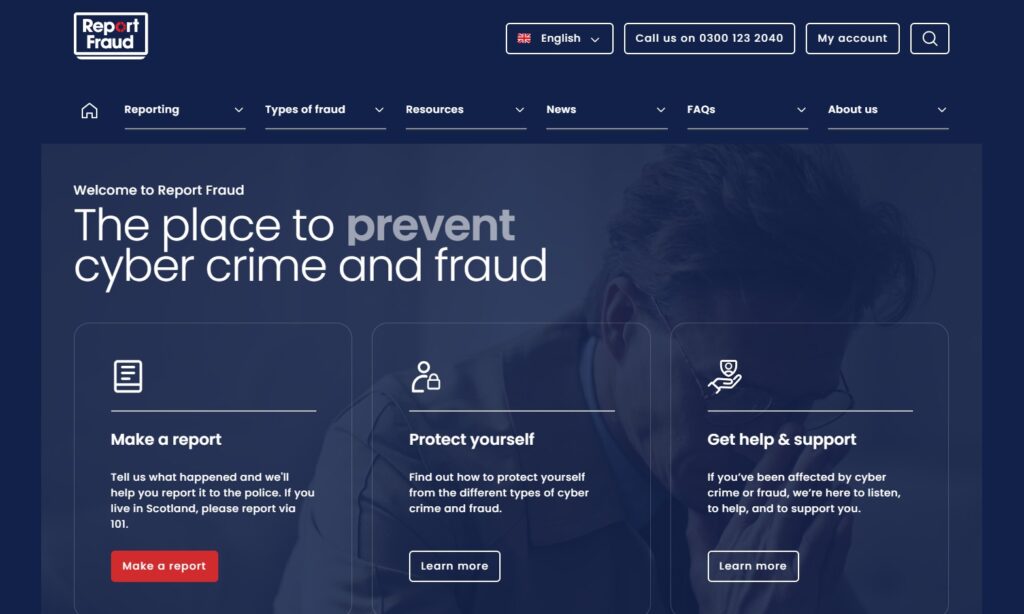
Against this backdrop, the launch of Report Fraud by the City of London Police represents a genuinely significant shift. For too long, victims have felt lost in a maze of confusing reporting routes, lack of visibility and lack of action. Report Fraud gives the public and businesses a single, modern front door to report fraud and cybercrime, backed by a national triage and intelligence platform designed to get every report working for the next investigation.
This isn’t just tech for tech’s sake: it’s about putting victims first, bringing clarity to frustrated reporters, and turning disparate data into actionable intelligence. That’s exactly the kind of momentum the counter-fraud community needs as criminals up their game.
Yes, the threat is real and evolving fast. But with collaboration, innovation and services like Report Fraud taking shape in 2026, and finally tools are being built that have been long needed and, crucially, doing so with victims at the heart of the process.

2025: A Year of Rising Fraud in the UK and Ireland
As we wrap up 2025, the year has been marked by a continued rise of trends in fraud across the UK and Ireland. The latest Fraudscape report from Cifas shows that fraud isn’t just persisting — it’s evolving, accelerating, and fraudsters are exploiting the very technologies and systems that make our digital lives possible. With criminals innovating faster than ever, individuals and organisations alike need to understand what’s driving the surge and how to fight back.
Fraud in the Digital Age
Fraud in 2025 is becoming increasingly digital at its core. The vast majority of fraud cases now involve online channels and technology-enabled tactics. From identity theft and account takeovers to AI-assisted synthetic identities, digital transformation has boosted convenience — and given fraudsters new tools to scale their attacks.
Artificial Intelligence, in particular, is a double-edged sword. While legitimate organisations use AI to detect and block scams, fraudsters are themselves using generative tools to fabricate convincing fake IDs, spoof communications, and automate attacks at scale. These aren’t your typical “Nigerian prince” schemes anymore; we’re talking sophisticated social engineering and algorithm-driven impersonation.
Eye-Opening Stats
The numbers from 2024 (the latest full year of data) paint a stark picture:
- A record 421,000+ fraud cases were logged to the National Fraud Database — a 13% year-on-year increase and the highest on record.
- Identity fraud dominated, accounting for nearly 60% of all cases.
- Account takeover fraud surged by 76%, with telecoms and online retail heavily targeted.
- Unauthorised SIM swaps skyrocketed by 1,055%, exposing vulnerabilities in mobile-linked authentication.
- Middle-aged and older adults, particularly those over 61, remained prime targets for many schemes.
These are not just numbers — these statistics represent damage to real people, emotional stress, real and often life-changing financial loss, and real reputational damage.
What the Experts Are Saying
Fraud experts describe 2025 as a year where “the basics are no longer enough.” Traditional defences like static passwords or simple verification are being outpaced by adaptive, automated threats. Furthermore, experts have repeatedly warned that fraud tactics are getting more sophisticated and cross-sector collaboration is critical.
Professionals also highlight a troubling social trend: a growing acceptance of fraud-related behaviour, especially in workplace and first-party contexts. New research indicates an unsettling proportion of workers view certain fraud-adjacent actions as justifiable, signalling cultural weak spots that criminals can exploit.
What’s Driving the Surge in Fraud
Behind the rising figures are several clear drivers:
- Economic and cost-of-living pressures: Strain on households and businesses can make fraudulent shortcuts look tempting — and make people more vulnerable to scams.
- Technological complexity: Fraud rings are using automated tools, AI, and social engineering at scale, making detection harder and increasing impact.
- Data exposure and digital footprints: More online services mean more personal data floating around — a feast for fraudsters.
- Cultural shifts: Increasing tolerance of deceptive behaviour, especially among younger demographics in the workplace, highlights the need for stronger ethical and educational frameworks.
All of these create fertile ground for fraud to flourish unless countered with informed strategies and resilient systems.
Fighting Back Against Fraud — How You Can Protect Yourself
So what can individuals and organisations do? Here are practical, no-nonsense steps that matter in 2025:
Watch Your Digital Footprint
Regularly audit your online accounts. Reduce the number of places your personal data lives — fewer accounts, less exposure.
Double-Down on Authentication
Move beyond SMS-based verification where possible. Use authenticator apps or hardware tokens. Criminals have mastered SIM swaps — don’t hand them the keys.
Educate and Train Continuously
For organisations: embed fraud awareness into training programmes, not just once a year but as part of ongoing culture. For individuals: learn common scam patterns and share warnings with family and friends.
Monitor Accounts Actively
Set up alerts and review statements frequently. Prompt action stops losses before they balloon.
Think Critically, Act Sceptically
If something looks too good, or too urgent, pause. Fraudsters love urgency and fear. Slow down and verify first.
Looking Ahead to 2026
As we head into 2026, fraud will undoubtedly continue to evolve. Machine learning and AI will proliferate, both as tools for protection and weapons for fraudsters. Organisations and individuals who invest in smarter defences, continuous education, and robust identity verification will be better placed to stay ahead of the curve.
But here’s the good news: awareness is rising, and so is collaboration. Cross-sector intelligence sharing, more sophisticated detection tools, and greater public understanding can turn the tide. The fraud landscape won’t retreat on its own, but with informed, decisive action, we can make 2026 a year of stronger defences, not just stronger criminals.
Stay vigilant — and let’s fight fraud together.
Don't Let Scammers Steal Your Christmas Cheer
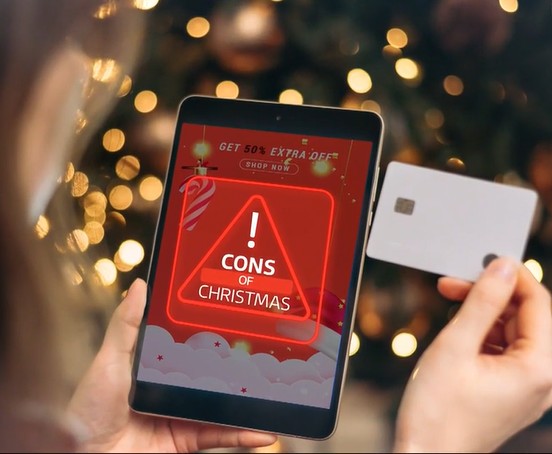



Christmas Cheer for Criminals: Stay One Step Ahead of Seasonal Scams
The festive season should be about goodwill, not hard lessons. Unfortunately, Christmas is peak time for fraudsters, who know wallets are open, inboxes are busy and people are distracted.
Online shopping fraud Christmas is a classic time when scams rise sharply. Criminals create convincing fake websites and social media adverts offering “too good to miss” deals. If the price looks unreal, it usually is. Stick to trusted retailers and check website addresses carefully.
One of the biggest growth areas is delivery and parcel scams. Fake texts or emails claim a package is delayed or needs a small fee to be released. Click the link and you may hand over card details or personal information. If you’re not expecting a parcel, don’t engage.
Impersonation scams spike at Christmas, with fraudsters posing as banks, retailers or even charities. They rely on urgency and emotion. A genuine organisation will never pressure you into immediate action or ask for full security details.
Finally, gift card and payment redirection scams target both individuals and businesses, often using spoofed emails or hacked accounts.
To stay safe: slow down, verify before you click, never share one-time passcodes, and talk to family members—especially older relatives—about common scam tactics. A cautious Christmas is a safer one.
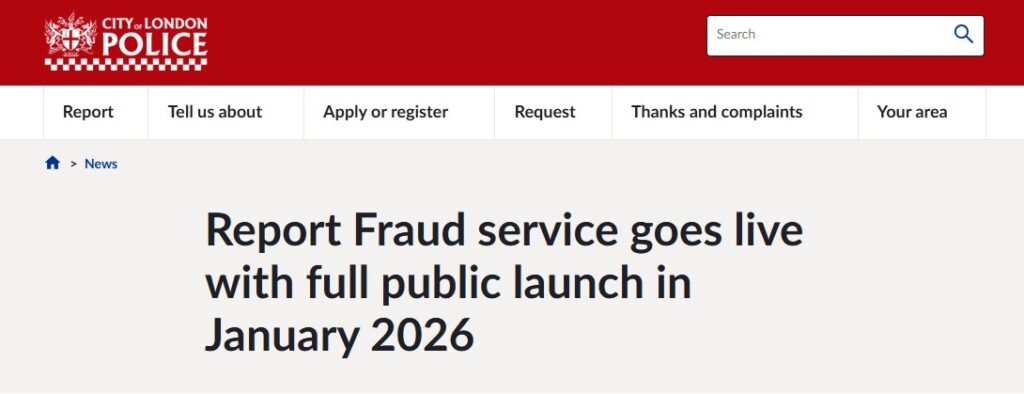
From Thursday 4 December 2025, anyone needing to report cyber crime or fraud will be directed to our new Report Fraud service.
Report Fraud has replaced Action Fraud, for use in England, Wales and Northern Ireland. People affected by cyber crime or fraud in Scotland should continue to call Police Scotland using the 101 telephone number.
Anyone searching for how to report cyber crime or fraud, or trying to use Action Fraud, will, from 4 December 2025, be redirected to the new service, which can be reached directly online at reportfraud.police.uk or by calling 0300 123 2040.
The new service will be subject to a full public launch in January 2026.
Report Fraud will provide:
- A clear and simple reporting process to tell the police about cyber crime and fraud
- Guidance on what to report and how that information is used
- Further support information for victims
The go live of Report Fraud marks the beginning of our new service to improve the national response and, most significantly, the development of a more comprehensive intelligence picture of cyber crime and fraud affecting people and businesses and will result in a faster response from law enforcement agencies.
To understand more or to report cyber crime or fraud, you can now visit www.reportfraud.police.uk
PSNI warns Northern Ireland businesses to be on their guard against phishing
There have been recent reports by a number of local businesses, particularly those in the legal sector, of phishing attacks.
The warning specifically focuses on looking out for phishing emails sent by criminals using a compromised known contact. The emails include a shared file that can be accessed via a ‘Secure Portal’. If you weren’t expecting a shared file then beware.
Don’t be fooled and read more details at: https://www.psni.police.uk/latest-news/detectives-police-services-cyber-crime-centre-are-asking-northern-ireland-businesses-be



Avoid Holiday Scams: Stay Safe This Christmas!
The holiday season is a time for joy, generosity, and connection – but it’s also a prime opportunity for fraudsters. As you shop for gifts, donate to charities, and plan festive activities, staying vigilant can help protect your hard-earned money and personal information.
Here are key tips to avoid scams this Christmas:
- Shop Smart Online
Stick to reputable websites and avoid clicking on suspicious links in emails or ads. Check website URLs carefully—fraudsters often create fake sites with similar names to trusted brands. Look for “https://” and a padlock symbol in the address bar for secure transactions. - Beware of Too-Good-To-Be-True Deals
Scammers lure victims with deals that seem irresistible. If an offer seems unrealistically cheap, it’s likely a trap. Research sellers thoroughly, especially on marketplaces or social media. - Verify Charities
The season of giving inspires generosity, but fake charities are common. Check you are actually donating to the registered charity not to a scammer. If you want to donate, it’s best to avoid donating through social media – go to the charity’s web site. Avoid sharing personal or financial details over the phone or via unsolicited emails. - Protect Your Accounts
Enable two-factor authentication (2FA) on all your accounts, use strong passwords, and monitor your bank statements for unusual activity.
And if you think you’ve fallen for a scam and given away any of your personal financial information, call your bank straight away.
This Christmas, enjoy peace of mind by staying cautious and informed. Protect yourself and spread awareness to help others stay scam-free!
Previous Events
NI Fraud Forum Masterclass - Wednesday 24th September 2025
Join us to discover details about Payment Diversion Fraud – know where your payments are headed – and how to keep them safe.
Payment Diversion Fraud is one of the most insidious and damaging threats facing businesses today. Also known as “mandate fraud” or “invoice redirection,” it is a calculated cybercrime that manipulates trust, exploits routine processes, and drains organisations of often substantial sums of money.
Northern Ireland businesses are not invulnerable. Businesses of all sizes and across all sectors can fall victim. A single successful attack can destabilise cash flow, derail projects, and, in some cases, threaten the very survival of a company. Fraudsters are highly organised, sophisticated, and relentless in targeting finance teams, suppliers, and customers alike.
Details:
Start time: 08:30am with a light breakfast courtesy of Pinsent Masons
Finish: 10:30am
Where: Pinsent Masons Offices – 1 Lanyon Place, Belfast BT1 3LP
Free to attend but places are limited so please sign up soon
NI Fraud Forum Masterclass - Tuesday 27th May 2025
Join us for an in-depth exploration of the current fraud landscape in relation to Third-Party Risk within Northern Ireland and across the UK. This Masterclass offers an invaluable opportunity to hear from leading experts in the field, engage with industry peers, and enhance your understanding of strategies to combat fraud effectively. Ideal for professionals across various sectors, including finance, compliance, risk management, and anyone interested in gaining a deeper understanding of the fraud landscape.
Details:
Start time: 08:30am with a light breakfast courtesy of PWC
Finish: 10:30am
Where: PWC Offices – 20 Wellington Place, Belfast BT1 6GE
Free to attend
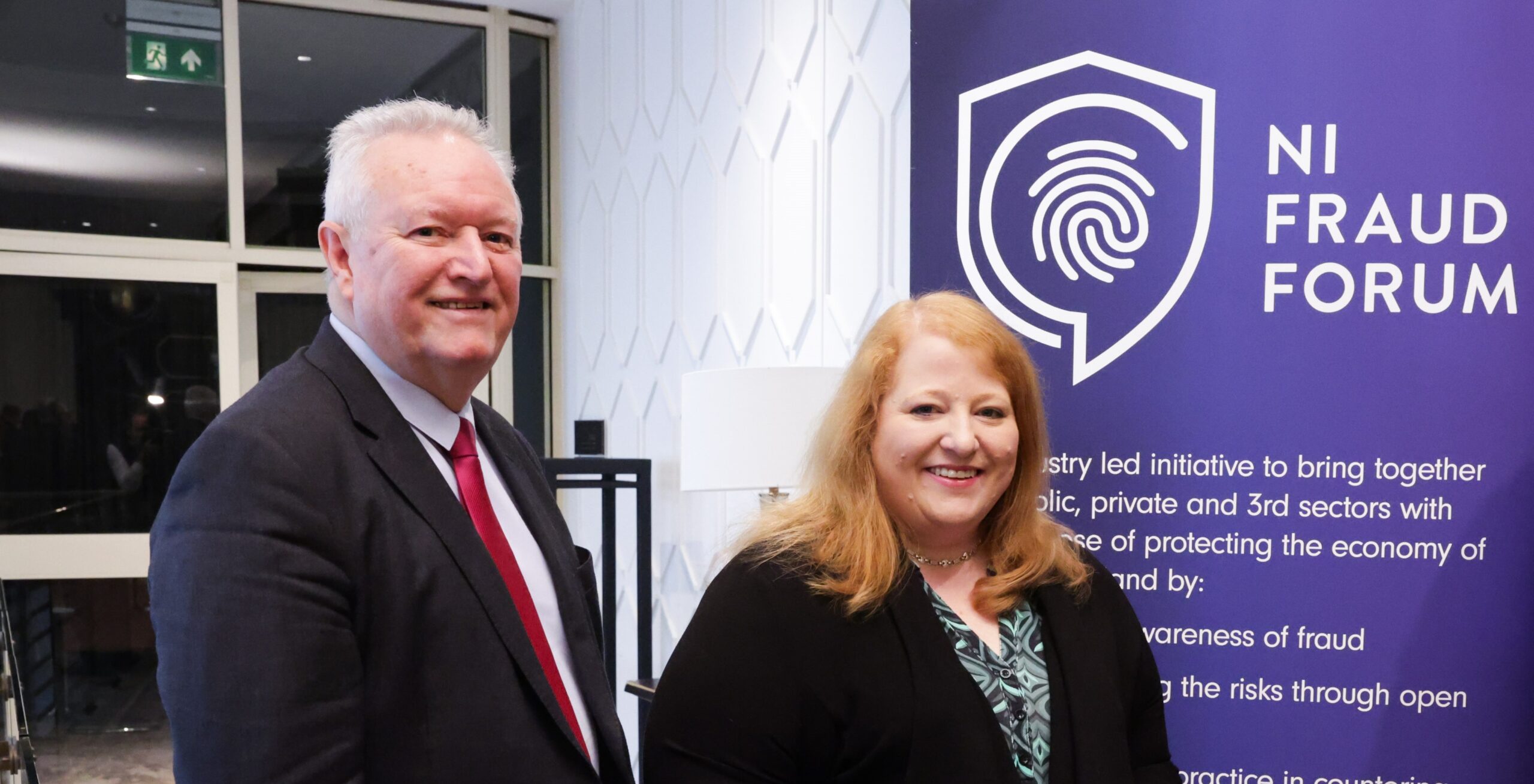
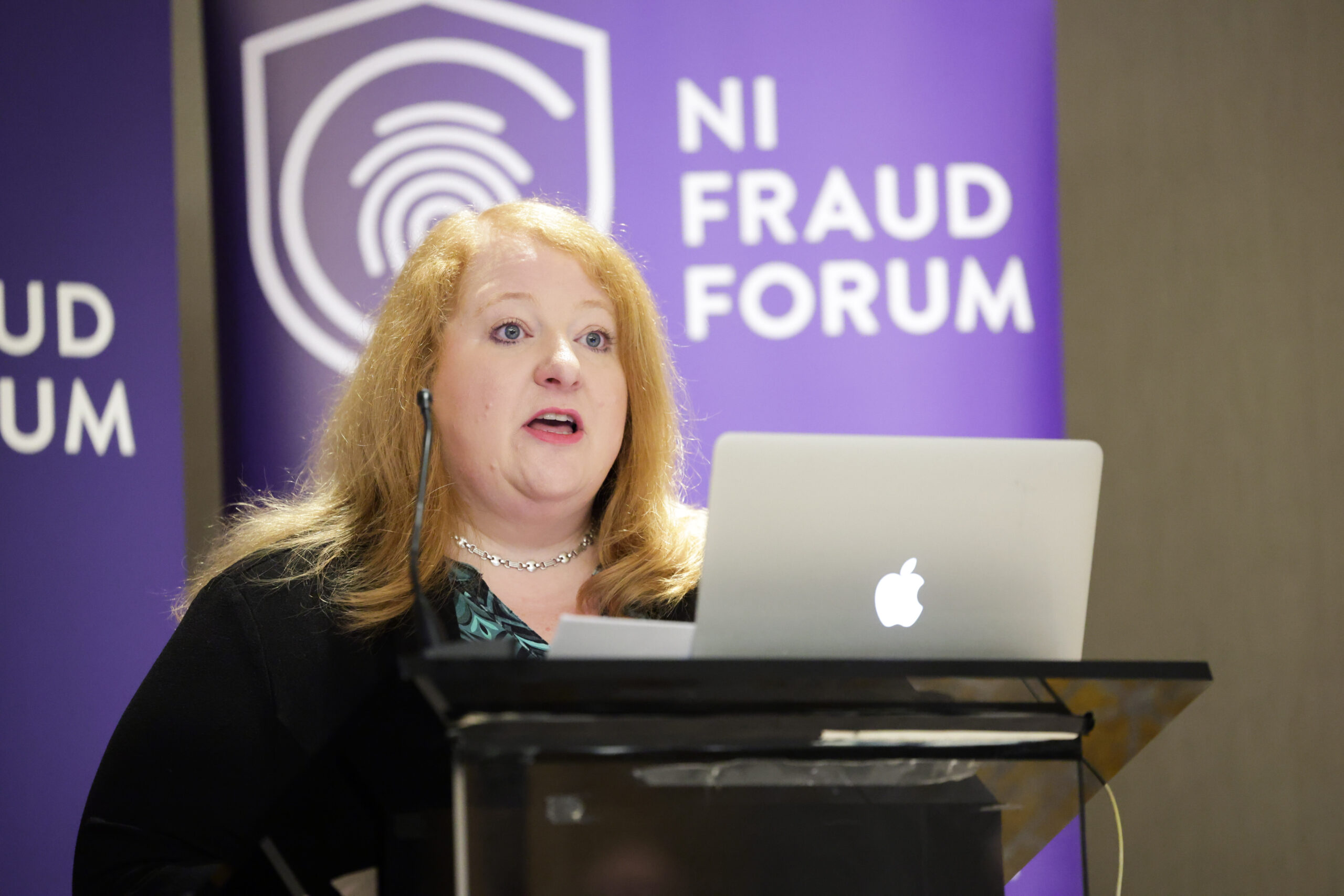
Minister for Justice Naomi Long MLA - Keynote Speaker - NI Fraud Forum Conference 2024

Minister of Justice, Naomi Long MLA said:
“Despite ongoing awareness campaigns, members of the public continue to be tricked by so-called scammers. PSNI figures show that in the 2023/24 financial year there were 3,815 reports made to Action Fraud about fraud in NI. This resulted in £16 million worth of reported losses – 23% of these were in relation to online shopping and auctions frauds.
“As Justice Minister, I work closely with UK Government Ministers to consider legislation that would benefit Northern Ireland. I also plan to bring forward new bespoke legislation, in the Assembly, to prosecute those involved in criminal conduct linked to serious organised crime in the new Justice Bill.
“However, we know that legislative measures alone will not solve the problem and that we all have a role to play. We will continue to work closely with partners such as the PSNI, the Organised Crime Taskforce, the Executive’s Programme on Paramilitarism and Organised Crime, Scamwise, Crimestoppers and Policing and Community Safety Partnerships who provide a huge amount of advice on preventing and reporting cyber-crimes, and on work to tackle fraud and scams.”